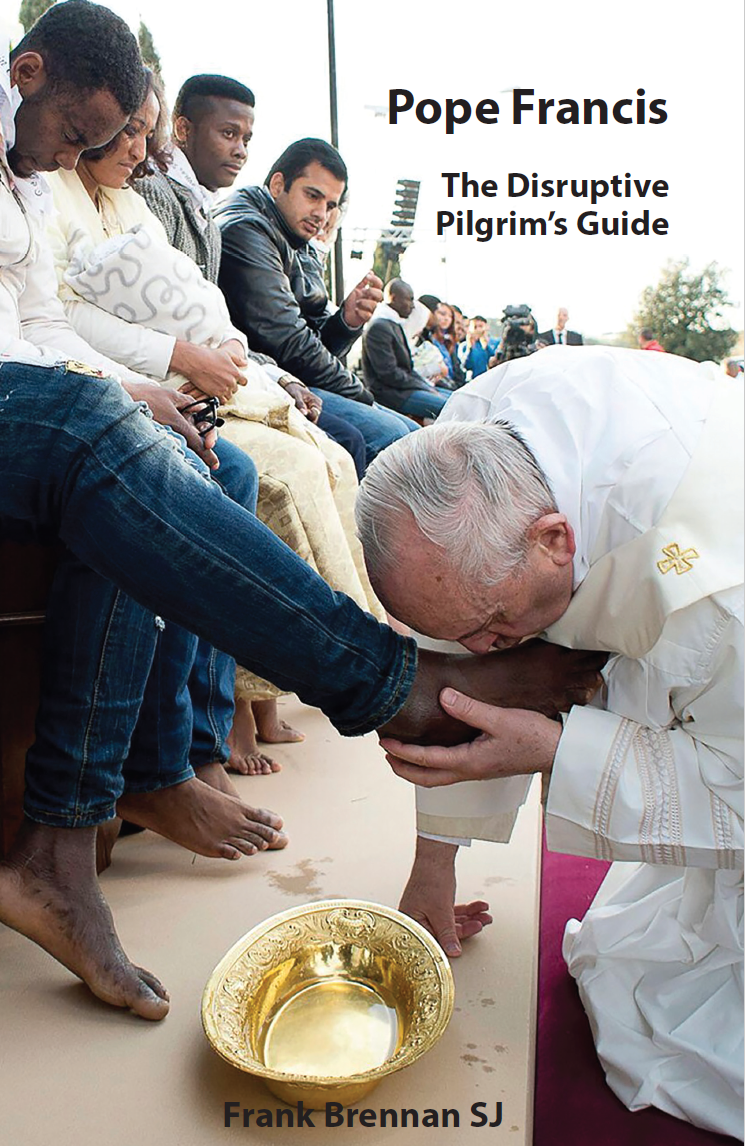
Description
About the book
‘We do not know if Pope Leo XIV will trim back some of Francis’s initiatives, insisting that the church doors be better supervised by the clergy and that the synod processes be more controlled by the bishops. Francis was a disruptor, challenging all teachings and practices that excluded groups of people from access to the Church’s sacramental largesse of justice, mercy, forgiveness and reconciliation. He encouraged disruptive pilgrims who would go to the peripheries and frontiers, tearing down walls and building bridges of understanding and solidarity.
Whichever direction things go, teachers in Catholic schools educating a vast array of students (not just Catholics) will continue to draw fruit from Francis’s refreshing openness to the complex and messy world inhabited by those teachers, their students and their families. On their pilgrim’s path, they will continue to find Francis a fraternal disruptive guide. It’s primarily for them that I write – that they may experience and communicate the joy and mercy of the gospel to anyone who seeks.
Francis was a Jesuit. So I commence with a Jesuit tribute to our Jesuit pope. I then provide something of a primer for teachers and others wanting to keep alive or know for the first time what Pope Francis was about, what he said, what he did, and what he left for us as the pilgrim people of God.’
– from the Introduction
About the author
Frank Brennan is a Jesuit priest and superior of the Alberto Hurtado Community of Jesuits in the parishes of St Lucia, Toowong and Indooroopilly in the Archdiocese of Brisbane. He was previously Rector of Newman College at the University of Melbourne and CEO of Catholic Social Services Australia. He was a peritus at the Fifth Plenary Council of the Catholic Church in Australia.
He is an Adjunct Professor at the Thomas More Law School at ACU and Adjunct Research Professor at the Australian Centre for Christianity and Culture. He is the author of 16 books.
‘A lucid, concise, accessible and thoroughly Ignatian guide to the right kind of disruption’.
– Emeritus Archbishop Mark Coleridge, Brisbane
‘Frank Brennan’s Pope Francis: The Disruptive Pilgrim’s Guide is a concise yet rich reflection on the transformative, often disruptive papacy of Pope Francis. …. As a guide for readers wanting to reflect on what a contemporary papacy could mean for ordinary believers, for the Church, and for the world, it is powerful and timely. ….Frank Brennan offers what he calls a “roadmap for pilgrims” — a guide for Christians seeking to walk with a Church that is an “evangelising church committed to care for our common home by being fraternal and in solidarity with all, especially those on the frontiers and peripheries which are the privileged centres of grace.” Thank you Frank for your insights and roadmap and for opening the door for us, through which you invite us to step.’
-Archbishop Patrick O’Regan, Adelaide
Book Launch
John XXIII College in Perth
Article on Jesuit Australia website
The Pope who was both disruptor and restorer
Reflections on Frank Tenison Brennan’s Pope Francis: The Disruptive Pilgrim’s Guide
Tuesday 9th December, 2025
1. Introduction
Frank Brennan’s Pope Francis: The Disruptive Pilgrim’s Guide is a concise yet rich reflection on the transformative, often disruptive papacy of Pope Francis. At around 100 pages, the book is neither a biography nor a strict academic study; rather, it is a series of thematic meditations shaped by Frank’s Jesuit background, pastoral experience, and admiration for Francis’s vision of a Church grounded in mercy, justice, and spiritual courage.
For any work, it is important to understand for whom that work is intended. In the Introduction, Frank says, “Francis’ teachings can appeal to teachers of all faiths and none… It’s primarily for them that I write.”. In this the book succeeds as an accessible, hopeful account of Francis’s papacy. What emerges is a warm yet acknowledged incomplete portrait, one that is illuminating, but not exhaustive.
2. A Jesuit Reading of a Jesuit Pope
One of the book’s greatest strengths is Frank’s ability to situate Pope Francis within the Jesuit intellectual and spiritual tradition. As a fellow Jesuit, Frank understands the instincts that shape Francis’s pontificate: discernment, compassion, engagement with the poor, and a willingness to challenge comfortable structures. He presents Francis as a “disruptive pilgrim,” someone who unsettles complacency not for the sake of conflict, but to renew the Gospel’s urgency. In this framing, disruption becomes a pastoral tool, a means of shaking the Church awake to injustice, ecological crisis, and human suffering.
This “insider” perspective offers nuance and warmth rarely found in journalistic or political treatments of Pope Francis. Frank Brennan interprets Francis’ insistence on mercy, synodality, and engagement with the peripheries as deeply grounded in Jesuit spirituality. The book thus helps readers understand why Francis has placed such emphasis on listening, openness, and a missionary Church rather than a fortress Church. He thus provides an important hermeneutical key to unlocking the rich elements of Francis pontificate.
3. Themes of Ecology, Solidarity, and Pastoral Realism
A major section of the book explores Francis’s ecological commitments, made globally visible through Laudato Si’. Frank Brennan highlights how integral ecology, the intertwined concern for the planet and the poor, has become one of the defining pillars of this papacy. Francis’s environmental teachings are not presented as political statements but as deeply spiritual calls to conversion. Frank captures this with pastoral sensitivity, emphasising the moral dimensions of climate change, consumerism, and global inequality.
Other chapters address family life, the realities of modern relationships, and the need for pastoral realism rather than doctrinal rigidity. Frank aligns himself closely with Francis’s emphasis on accompaniment, compassion, and understanding the complexities that families face today. Similarly, his discussion of synodality highlights Francis’s attempt to create a more participatory and listening Church — one open to the voices of women, laypeople, and communities often ignored at institutional levels.
These reflections make the book especially valuable for readers searching for a clear, accessible summary of Francis’s social and spiritual priorities. Frank’s tone is pastoral, hopeful, and inviting.. Particularly helpful are the Questions for Reflection, crafted by Janeen Murphy, found at the end of each chapter.
4. How This Book Contributes to Understanding Pope Francis
Despite its acknowledged limitations, The Disruptive Pilgrim’s Guide serves an important role, especially in the evolving landscape of the Church and global Catholicism in the mid-2020s in four ways.
First, it offers a concise orientation to the key themes of Francis’s papacy, in a way that is digestible to lay readers, clergy, and those curious about contemporary Catholicism. In an era where the Church faces multiple crises, ecological, social, institutional, existential, a short, reflective guide grounded in spirituality yet deeply aware of social realities can be very timely.
Second, the book invites readers into active discipleship rather than passive reception. By framing the Church as a “pilgrim community,” Brennan challenges Christians to see themselves not as consumers of doctrine but as companions on a journey — walking with the marginalised, caring for creation, engaging in social justice, promoting inclusion, and embracing synodality. That is a powerful counter-narrative to institutional rigidity or doctrinal complacency.
This is all the more so as we acknowledge yesterday’s celebration of the conclusion of Vatican II, sixty years ago, and its prism of understanding the church as “The pilgrim People of God”.
Third, given that it is written by a fellow Jesuit, the book helps highlight how the spirituality and intellectual tradition of the Jesuits may shape the future direction of Catholicism. In that sense, the book is not only about Francis the individual, but about a deeper undercurrent in the global Church: one that values dialogue, social justice, ecology, and pastoral care.
Finally, even for critics and sceptics, the book serves as a useful conversation starter. Its hopeful tone invites debate: about what kind of Church we want, what reforms are possible, how to balance tradition and change, and how to navigate the tension between institutional stability and prophetic transformation.
5. Conclusion
Pope Francis: The Disruptive Pilgrim’s Guide is best understood as a thoughtful companion rather than a comprehensive biography. It is a worthy door into a larger house.
In short: it’s a short, passionate invitation to pilgrimage, not an exhaustive dossier. As a guide for readers wanting to reflect on what a contemporary papacy could mean for ordinary believers, for the Church, and for the world, it is powerful and timely. But as a definitive account of everything “Pope Francis” stands for (or is challenged by), it is deliberately partial, shaped by hope, by faith, by a vision of what the Church might become.
In his conclusion, Frank Brennan offers what he calls a “roadmap for pilgrims” — a guide for Christians seeking to walk with a Church that is an “evangelising church committed to care for our common home by being fraternal and in solidarity with all, especially those on the frontiers and peripheries which are the privileged centres of grace.”
Thank you Frank for your insights and roadmap and for opening the door for us, through which you invite us to step.
Patrick O’Regan
Archbishop of Adelaide