Description
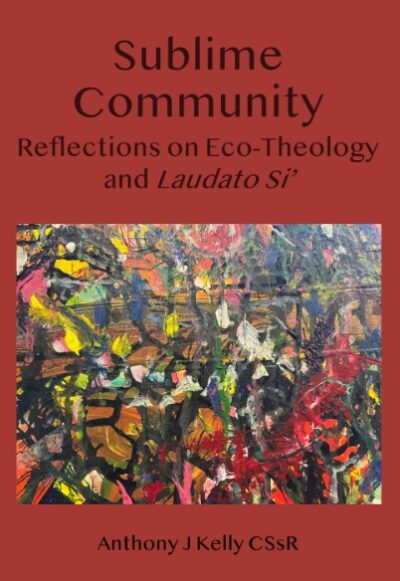
This book is about participating in a conversation seeking to develop a holistic spirituality and theology. At its heart is the aboriginal conviction that everything is connected. It contains personal biographical story to encourage others to enter its whole of Creation Theology. It is about more than just us humans.
In the writing of theology, it is always important to address its applicability to the contemporary context. In our time that context is “climate change” and all the complex issues surrounding the warming of our planet. This book begins with a summary of the interconnected issues that we now face. It also looks at some proposed strategies for mitigating the impacts of climate change. There is an awareness that climate change arises from human rather than natural activity.
The book then turns to a Tasmanian aboriginal theology that emerges out of colonial invasion. Themes from this theology are then followed through from the perspective of European philosophy, science and Christian theology. The last section of the book contains some reflection on what has come before. It seeks to discover hope for our children in a context where hope seems in short supply.
Rev Tim Matton-Johnson. B.A. B.Theol. M.Theol. Grad. Cert. Com. Tim was ordained as a minister in the Uniting Church in Australia in 1985. Initially he served in three rural parishes in Victoria and Tasmania. After a break from full time ministry, where he worked in the accounting profession, he returned to ministry and served in urban ministry and, also with the Uniting Aboriginal Christian Congress. Some of these placements were part time, some fulltime. Tim is now retired and living with his wife of over 40 years, Lynne, two cats and a Whippet on a small rural residential property north of Hobart.
Tim grew up in a complicated family. Hence the double-barrelled surname. A few years ago, when his mum died, aged 86, her will left her estate to her children, as is quite normal. However, eight children were named instead of the six that most might have expected. Tim has three full siblings, one halfsister,
one adopted sister, a foster sister, and the eighth was an ex-sister-inlaw, to whom his mum felt a deep maternal commitment. She was the matriarch of quite a substantial mob and had outlived two husbands. Family research had also linked us to Aboriginal Tasmania through her side of the family. For her the actual lived relationships within family were more important than the simple genetic lineage. An attitude that Tim also shares along with all his siblings. An attitude that is more reflective of aboriginal culture than European.