
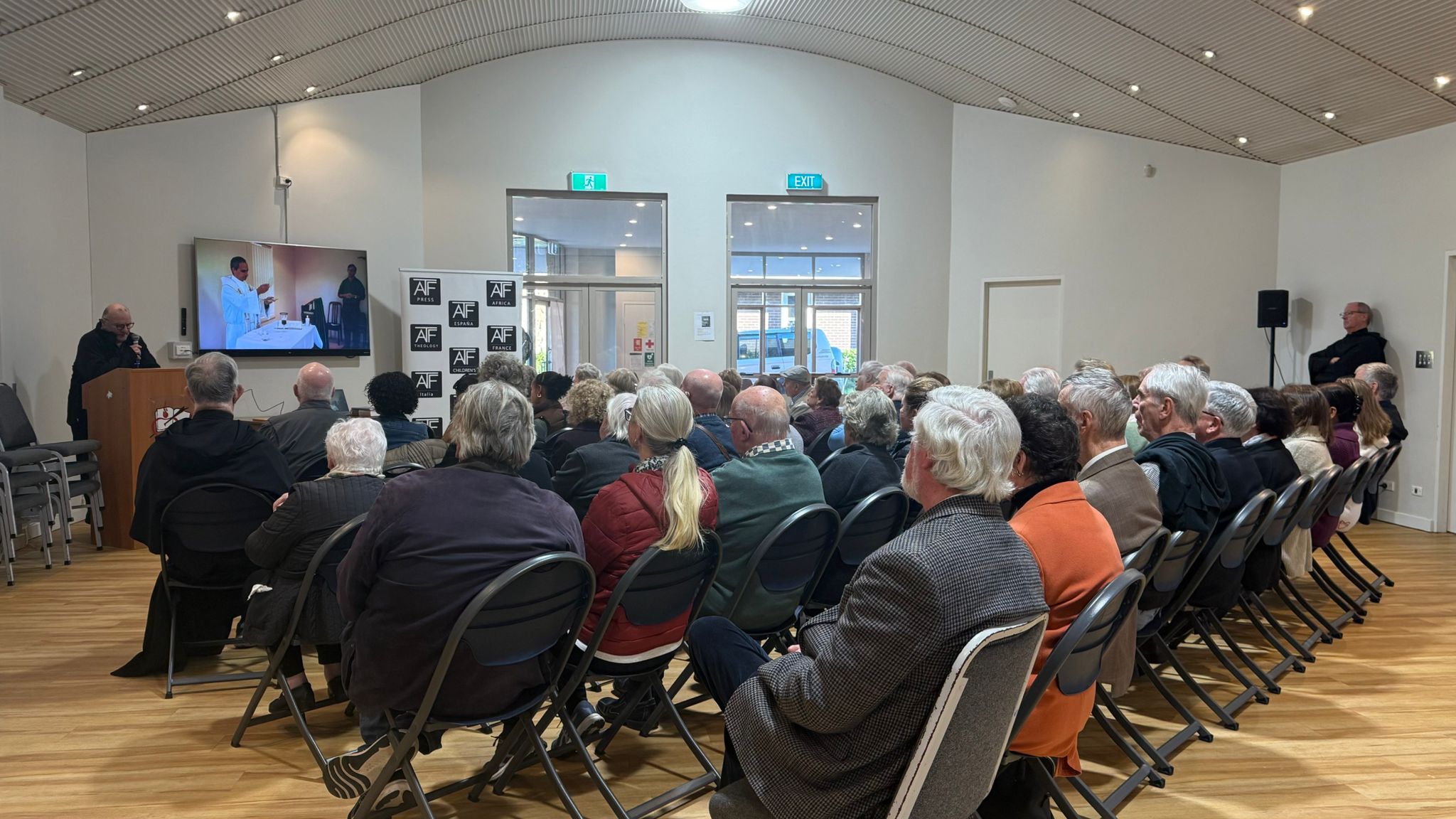
The times 2:07AM and 3:14AM on Friday, 9th May will remain etched in mind for the years to come. Like many around the world, I turned on the radio and heard the BBC journalist awaiting the appearance of smoke and lamenting that he did not expect anything dramatic to happen yet. That was, at least, until 2:07, when he interrupted his own sentence as emerging cheers in the background made him realise white smoke was billowing.
At 3:14, the solemn announcement began, and quickly the names Robertus Franciscum were articulated. A sudden shock set in. Our Augustinian brother, someone so many of us knew and experienced personally, had been elected to the papacy. Incomprehensible.
With my confreres, I watched the first appearance of Pope Leo XIV, our brother Robert, on the balcony in St Peter’s Square. His election was a shock, but this does not mean that it was unwelcome, or that there are misgivings. Instead, it was the shock that someone whom many of us know in a very immediate sense was now elected to such a prominent, universally significant position. In that moment, I felt the prayers of many were answered – that whatever outcome the election may have, it would be a good one.
In the following days, I found myself reflecting on the Incarnation. Our direct experience of Pope Leo XIV, a person known to us, being called to a mission of unique prominence and for all emphasised the reality of what the Incarnation experience would have been for the disciples. In their post-Easter reality, they had a unique experience of the extraordinary breaking through the ordinary. This was now appreciated with a new poignancy and appreciation due to a very different yet analogous experience.
Pope Leo XIV would be the first to issue a corrective here – his own sense of weakness, linked with Augustine’s own sense of brokenness, and with all of us coping with the reality of sin. We struggle, but we are carried by grace and the fact we journey together along the way.
On the night of the election, as Pope Leo XIV uttered his first words my mind quickly shifted from the event of the election to its deeper significance. What was apparent in those words was his focus on all now entrusted to his care – the whole Church, and his understanding that he was also a servant of humanity in a global sense.
His chosen name, Leo, has been linked specifically to the social justice thrust of Pope Leo XIII (1878-1903) in the context of the industrial revolution. The choice also has a resonance for Augustinians, as Pope Leo XIII had a crucial role in supporting the renewal of the Order in the late 19th century after a period of decline.
The new Pope spoke of communion, dialogue, bridge-building, friendship. He quoted Augustine – for you I am your Bishop, with you I am a Christian.
He alluded to the present horrific conflicts – a direct challenge to hatred and a call to love.
He spoke of deepening of communion within the Body of Christ. I believe he values both clarity of direction and the capacity to hold in dialogue diverse voices and experiences within the Church.
Pope Leo was preaching the Gospel. The lens of what we would call Augustinian spirituality was evident in that attention to the quality of human relationships that should pervade among us disciples of Christ and brothers and sisters in the family of humanity.
Days before the election, then-Cardinal Prevost had emphasised the foundation of a personal relationship with Christ underpinning our activity in the name of Christ. The attention of Augustine to the depth of our inner life shone through the words of the Cardinal.
As with me and my community, the announcement of Robert Prevost OSA as the new Pope probably took the world at large by surprise. In terms of giftedness, suitability and position, he was in the mix but not one of the names most mentioned. Therefore, there was something of the unknown about him from the global perspective.
The American, the missionary in Peru, the first Pope born post-World War II, the first Pope younger than the Beatles, the first Pope who did not reach adulthood until after the conclusion of the Second Vatican Council. And then, the first Pope who was a member of the Order of Saint Augustine, the hermits who were brought into a fraternity of mendicant friars under the Rule of Saint Augustine of Hippo in mid-13th Century Tuscany.
The days following the election were days of humble , joyful gratitude among the Augustinians and with many in our ministries. When he was Prior General of the Order, Robert Prevost had visited Australia on six separate occasions. His warmth, accessibility and ease of presence are deeply cherished among many of the laity associated with the Order’s ministries here.
Surprise and curiosity also strongly featured in those days. When it was realised that the new Pope was an Augustinian, many of us throughout the world upon were quickly called upon to respond to requests for information and reflections on personal experience.
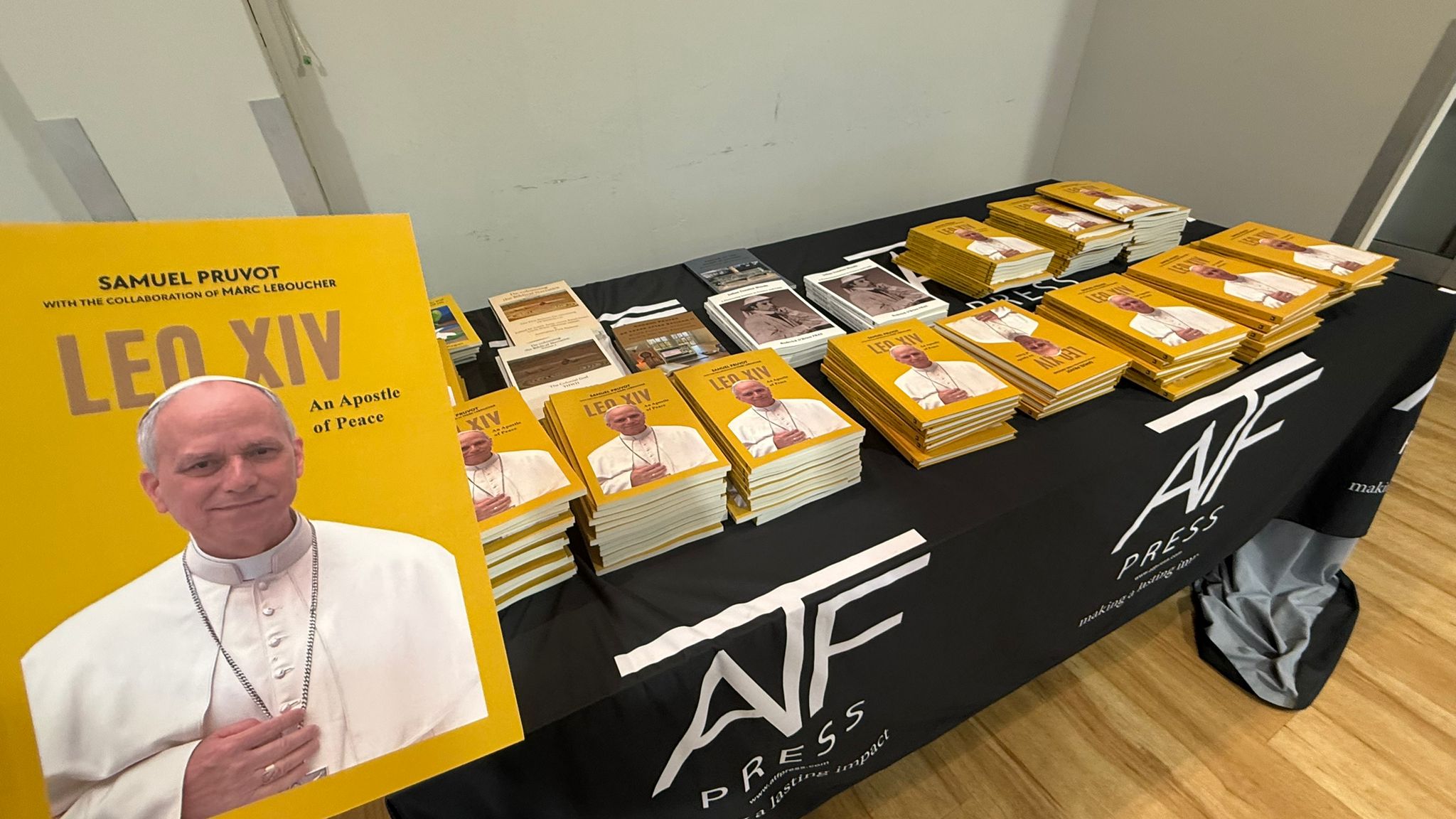
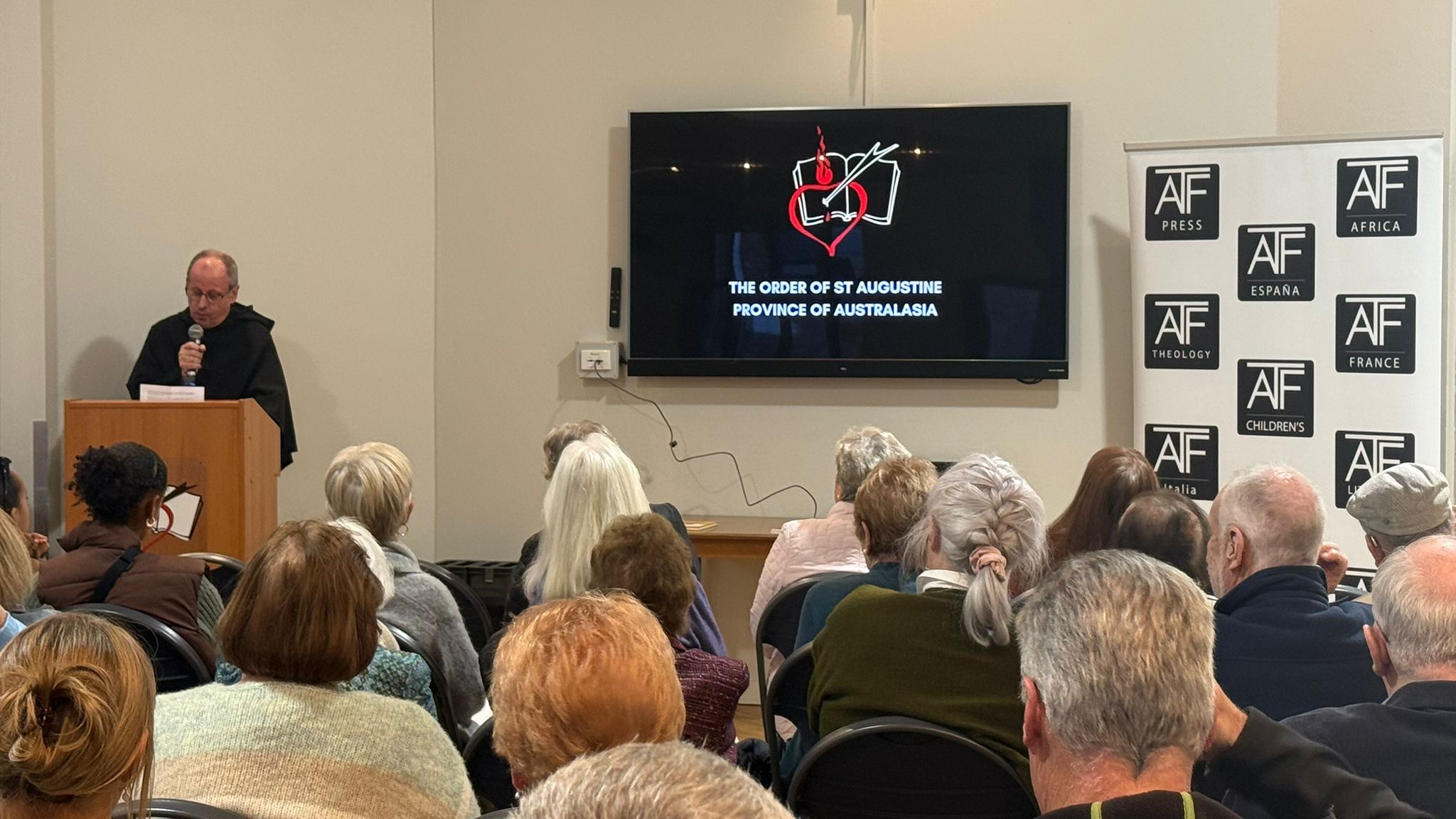
This curiosity has necessitated the quick need for access to material that familiarises the world with Robert Prevost, now Pope Leo XIV. It is in this context I wish to speak to the book being launched today –– Leo XIV – An Apostle of Peace, written by Samuel Pruvot with the collaboration of Marc Leboucher.
These early works on Leo have been quickly prepared to enable prompt accessibility to wide diversity of audiences who wish to familiarise themselves with the life and person of the new Pope. More considered scholarly works lie in the future.
Pruvot’s work is relatively brief but informative. Roughly the first third relates to the process of the conclave both generically, and to this particular conclave. There is reference to various sources of information and there is conjecture, for example the speculation as to the Pope’s frame of mind as the conclave evolved.
Particularly worth reading is a profound reflection from Mother Yvonne Ruengoat, the former superior general of the Daughters of Mary Help of Christians (Salesians), and a member of the Dicastery for Bishops.
The latter chapter of the book deals with the person himself. Various influential aspects of his person are dealt with – family, nation, religious congregation, Peruvian experience, leadership, and his role in the Vatican. The synodal disposition of the new Pope and link with Augustinian identity are also explored.
Then the issues of our time are covered – cultural perspectives, ecology, response to abuse, interfaith and ecumenical dialogue.
This book’s immediate strength is a prompt and timely familiarisation in accessible terms to the person, spirituality and theology of Robert Prevost now Pope Leo XIV and its implications for the life of our Church and indeed the world. I recommend it in that context.
The election of Pope Leo XIV is an important challenge to our Order to live out those themes of Augustinian spirituality and life that are now being highlighted. It is an occasion of renewal. Together, let us pray for our new Pope, for the future of the Church, and for its growth under his leadership of service.

Leo XIV – An Apostle of Peace
When he entered the papal conclave after the death of Pope Francis, on the 7th of May 2025, did Cardinal Robert Prevost OSA suspect that he would be elected as the Pope the following day? An American who was a missionary in Peru for many years, he was till his election the Prefect of the Congregation of Bishops. A new page has been turned with his election.
The first biography of the Pope Le…